Where did the expression come from? In its original incarnation, enemy of the people wasn't code for "enemy of my regime." In one of its earliest uses, the phrase was used to describe a leader himself – Nero. The Roman ruler was a disastrous emperor, and a careless one to boot. As his country fell into ruin, strained by construction costs and a massive devaluation of the imperial currency, Nero vacationed in Greece. He enjoyed musical performances and theater. He took a chariot to some Olympic Games. He considered whether to build a canal across the Isthmus of Corinth.
When he got back home, the political class was angry. And he didn't do himself any favors by ignoring a revolt in Gaul. The Senate grew so infuriated that they declared Nero an enemy of the people and drew up plans for his arrest and execution. Nero took his own life after a failed attempt to flee.
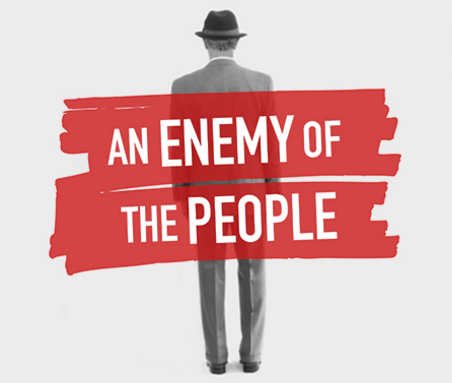
The term fell out of fashion among the political class, though it popped up in literature and art. Most famously, Henrik Ibsen wrote an 1882 play called "An Enemy of the People." It features a doctor who's almost run out of town because of an article he's written bashing the government. The idea came to Ibsen after his own brush with infamy – his play "Ghosts" challenged the hypocrisy of Victorian morality, and was deemed indecent.

Journos should be touching up their résumés so they can submit them to the new Ministry of Truth.
"Journalism is printing what someone else does not want printed. Everything else is public relations."
―― attributed to Orwell, but nobody can find it in his works.
Which means it was probably Mencken or Jack London.
W R Hearst, by one account.
I had head a similar quote, but in the end it was "everything else is advertising"
|Relevant.|
Go get 'em, Sentinel!
[About that phrase]:
So the term is intended to be applied upwards, towards those in power.
It's important to remember swinging through your target, so as to have maximum impact, and a good follow through.